Hooman Khalili.
A childhood journey from Iran to California, a career in storytelling, and a calling to stand with the women of Iran.
From Tehran to California.
Hooman was born in Tehran into a Muslim family. Before the 1979 revolution, he left Iran with his mother as a young child. They came to California, where a Presbyterian church community offered them shelter, and he grew up in the Bay Area.
He became a Christian as a child. The kindness his family received and the faith that took root in those years are part of the story he carries into his work today.
Years later, images of women demanding freedom in Iran would draw him back toward the country of his birth and lead him to an unexpected work in Jerusalem.
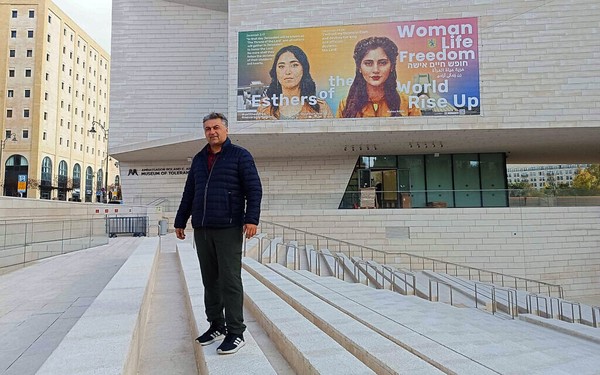
Listening, creating, serving.
Hooman built a career around stories, first on the radio and then through film.
For years he worked on the Sarah and Vinnie morning show at Alice 97.3 in the San Francisco Bay Area, screening calls, reviewing films and interviewing people. In 2011 he made Olive, a feature film shot on a cell phone. Radio and filmmaking gave him ways to reach an audience, work with creative partners and bring an idea into public view.
He helped people experiencing homelessness in San Francisco and made films with children undergoing cancer treatment in their hospital rooms, using storytelling to bring joy and encourage their imaginations.
The generosity his family encountered at the church is part of his own story. His later service to people in need gives another perspective on the biblical call to generosity in Proverbs 22:9. Faith and compassion are expressed not only in words, but also in the ways people care for one another.
“He who has a generous eye will be blessed, for he shares his food with the poor.”
The Jerusalem invitation.
In 2022, the death of Mahsa Amini and the protests that followed reached Hooman in California.
He wanted to support the women-led demonstrations and commissioned artists to make their stories visible. He recalls helping bring a San Francisco mural into being that November. Journalist Emily Schrader shared it and connected him with Jerusalem's then-deputy mayor, Fleur Hassan-Nahoum.
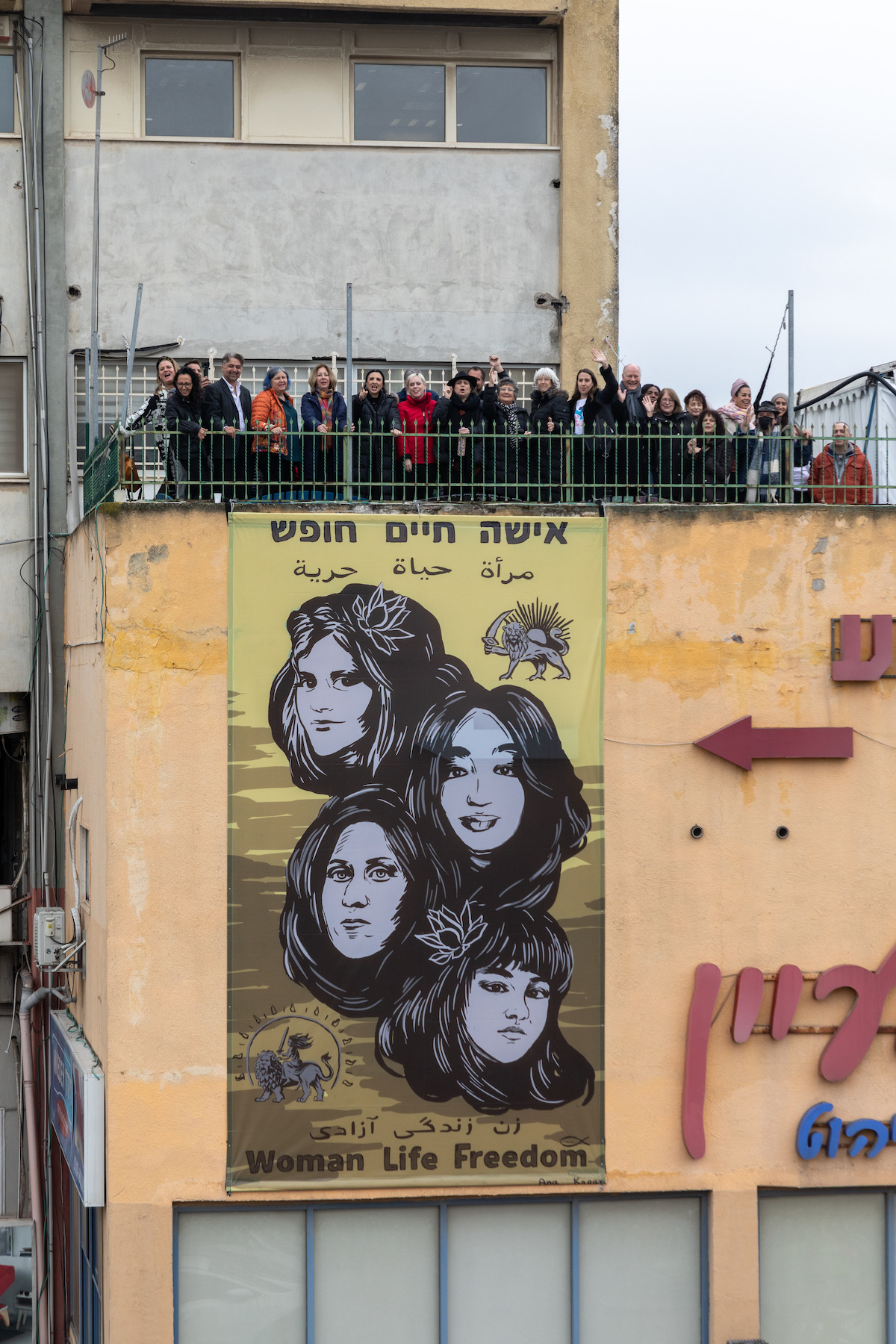
Hassan-Nahoum invited him to bring a work to Jerusalem. Hooman understood the invitation through his Christian faith and his hope for a renewed connection between Persians and Jews. She helped secure a wall, and Israeli artist Ana Kogan designed the first Jerusalem mural in partnership with him. Unveiled in January 2023, it honored Mahsa Amini, Sarina Esmailzadeh, Fereshteh Ahmadi and Nika Shakarami.
One mural at a time.
In his account of the journey, Hooman says he prayed about how many murals to create, and two people separately spoke to him of 18. He describes the task ahead as daunting, with funding uncertain. After the October 7, 2023 attack on Israel, he thought the murals might come to an end, but felt called to continue.
The invitation became a longer commitment. Hooman traveled repeatedly between California and Israel, working with artists, officials and local communities to bring the series into being. Without secure funding, he continued one mural at a time.
“Even so faith, if it has no works, is dead in itself.”
Sometimes, he has said, he travels before a wall is secured, trusting God to provide while working with people on the ground. The call to courage in Joshua 1:9 and the emphasis on power, love and self-control in 2 Timothy 1:7 offer language for facing uncertainty.
“for we walk by faith, not by sight.”
Biblical stories offer parallels to this trust. Hebrews 11:6 speaks of faith and seeking God; in Hebrews 11:8, Abraham obeys and sets out without knowing where he is going. In Matthew 14:29, Peter steps out of the boat and walks toward Jesus.
At the Jordan, God instructs Joshua to tell the priests to stand in the river (Joshua 3:8). After their feet touch the water, the waters upstream stop and the people cross on dry ground (Joshua 3:15–17). These stories speak to taking a first step in faith, not to a promise of a particular outcome for a mural.
The work continues.
The murals now bring these stories to communities in Israel, the United Arab Emirates and the United States.
Hooman hopes the portraits will encourage people to remember women whose lives were affected by persecution, and to show solidarity across cultures and faiths. His own faith remains central to that commitment, while the invitation to learn and care is open to everyone.
At Rice University in Houston, a temporary mosaic brought the portraits of Mahsa Amini and Shirel Haim-Pour to a campus audience. Other works carry different names and histories. Each depends on artists and the communities willing to make room for it.
Queen Esther, a Jewish woman in ancient Persia, appears throughout the series. Her story of courage at a consequential moment speaks to Hooman's hope that people will act when others need them.
“Who knows if you haven’t come to the kingdom for such a time as this?”
Abraham’s First Family carries a vision of reconciliation across communities and faiths. It first appeared within the First Station collage in Jerusalem, then stood on its own at Kanad Hospital in Al Ain, UAE, on September 17, 2026, and at Yesuah’s Love Heals in Minneapolis on September 27, 2026. The work speaks to the spirit of the Abraham Accords, but it is not an official emblem of the Accords.